


How Home Services Lead Generation Fills the Schedule
Home services. Published November 11, 2026. Updated November 11, 2026.

Home services lead generation is how trades get homeowners to call, text or book. That covers plumbers, roofers, HVAC techs, electricians and more. Leads you earn through your Google profile, your site and your past customers get cheaper each year. Ads and bought leads help while those build. Profit comes from how many leads turn into booked, completed jobs.
Two companies with the same budget can get very different results. A simple scorecard shows which lead sources pay.
Why do two companies with the same budget get different results?
Picture two drain cleaning companies in the same town. Each spends the same amount on ads every month. Each gets about the same number of calls.
The first company answers every call live. A dispatcher asks two questions and books a time on the spot. The tech texts a photo and arrival time. After the job, the customer gets a review link and a reminder for a maintenance visit next year.
The second company misses a third of its calls during busy mornings. Callbacks happen hours later. Quotes go out with no follow-up. Nobody asks for a review.
A year later, the first company has more reviews and a list of repeat customers. It also holds a stronger spot in the map pack. Its leads cost less because more of them come from sources it owns. The second company is still buying the same leads at the same price.
Both owners paid the same for ads. Most of the gap came from what happened after the phone rang.
Where do home service leads come from?
Home service leads come from a mix of channels. Some you own, some you rent and some you earn.
Search and the map pack bring the most ready-to-hire leads for many trades. A homeowner with a leak or a dead furnace searches, checks reviews and calls. A complete Google Business Profile and strong service pages decide who gets that call.
Local Services Ads sit above other results for many trades. You pay per lead, and a Google badge sits next to your name. Fast replies and disputing bad leads keep the cost in line.
Search ads catch the high-value jobs you want more of, like water heater replacements, roof replacements or panel upgrades. They need tight targeting and landing pages built for each job type.
Past customers are the cheapest source most companies ignore. Reminders, maintenance plans and seasonal check-ins bring work without new ad spend.
Referrals come from happy customers and from other trades. A plumber sends water losses to a restoration company. A roofer hears about HVAC problems in the attic.
Lead marketplaces and lead sellers can fill a calendar fast. Many sell the same homeowner to several companies at once, so speed decides who wins.
Trucks, yard signs, door hangers and direct mail build name recognition in the neighborhoods you serve. A homeowner who has seen your truck on the street may recognize your name later in search results.
AI answers are a newer path. Homeowners ask AI assistants who to call. Matching listings, fresh reviews and plain service pages raise your odds of being named.
Should you buy leads from lead marketplaces?
Bought leads have a place, but they shouldn't carry the business.
They work best when you're new to a market, filling a slow month or testing a new service. They also help a new company get its first jobs and reviews.
The trade-offs add up. Many marketplace leads are shared with other companies. The homeowner gets several calls within minutes and often picks the lowest price. When you stop paying, the leads stop.
If you buy leads, call within minutes. Track every lead by source and outcome. Compare sources by cost per booked job. Move budget toward owned channels as they start to work.
What does a home service lead cost?
The cost of a lead depends on the trade, the market and the channel. An emergency plumbing lead in a big city costs more than a gutter cleaning lead in a small town. Roof replacement leads cost more than repair leads because each job is worth more.
Owned channels get cheaper over time. A review or a ranking you earn this year keeps sending calls next year. Paid leads stay about the same price, or rise as more companies bid.
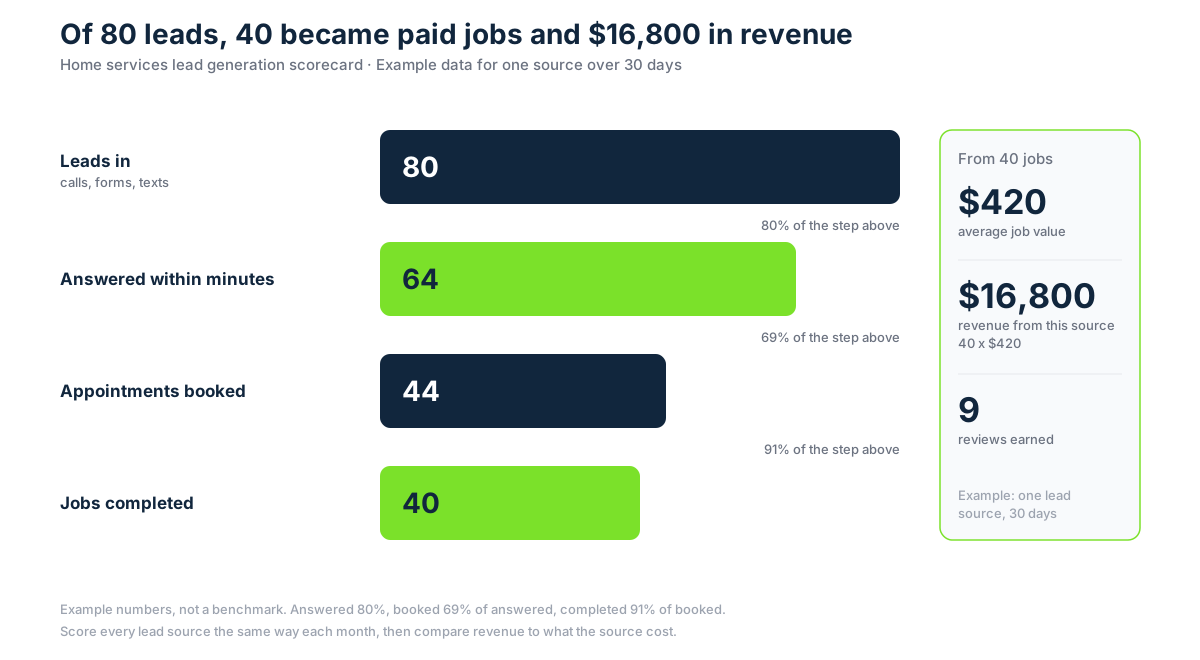
Cost per lead is the wrong number to chase. A cheap lead that never books costs more than a pricey one that does. Track cost per booked job and revenue per source instead. The scorecard above makes that easy.
Speed decides a lot of jobs. In a 2011 Harvard Business Review audit of 2,241 U.S. companies, only 37% answered a web lead within an hour.

How do you score every lead source?
A simple scorecard shows which sources pay off and where leads leak. Run it every month for each source. The numbers below are an example for one source over 30 days.
| Stage | Example count | What to look at |
|---|---|---|
| Leads in (calls, forms, texts) | 80 | Is the source sending enough volume? |
| Leads answered within minutes | 64 | Missed or slow leads point to staffing or routing |
| Appointments booked | 44 | A low booking rate points to scripts or pricing talk |
| Jobs completed | 40 | No-shows point to reminders and confirmations |
| Average job value | $420 | Rising value means better job mix |
| Revenue from this source | $16,800 | Compare to what you spent on the source |
| Reviews earned | 9 | Reviews feed the map pack and AI answers |
Put each source side by side. A source with fewer leads but a higher booking rate and job value often beats a busier one. A source with a poor answer rate may be fine. The problem may sit in your office.
What makes home service leads turn into booked jobs?
More leads won't help if they don't book. These five habits turn more calls into jobs on the board.
Answer live. Many homeowners call the next company on the list when they hit voicemail. If the office can't cover every call, use an answering service or a call-back system that kicks in fast.
Book on the first call. A clear script that asks what's wrong, where they are and when they're free turns more calls into appointments. Avoid quoting a price before you know the job.
Confirm and remind. Send a text with the tech's name, photo and arrival window. It cuts no-shows and builds trust before the knock on the door.
Follow up on every estimate. Replacement and remodel quotes often take several touches to close. A short call or text after a few days and again a week later keeps the job alive.
Ask for the review. The best time is right after a job goes well. A text with a direct link makes it easy.
What should a missed call plan look like?
Every home service company misses calls. Trucks are on the road, the office is busy and emergencies come at night. The goal is to lose as few leads as possible when it happens.
Start with a live answer during business hours. A shared line that rings several people, or an outside answering service, covers busy mornings.
After hours, decide how you'll handle each type of call. Emergencies may go to an on-call tech. Routine requests can get an automatic text with a booking link and a promise of a morning call.
Return every missed call fast. A callback within minutes saves many leads that would be lost by lunchtime. Track missed calls by hour of day so you can staff the busiest windows.
Treat this plan as part of home services lead generation. Put missed calls on the scorecard so their cost stays visible.
How do trade partnerships bring in leads?
Other trades see your customers before you do. A plumber finds water damage behind a wall. An electrician spots an old furnace in the basement. A home inspector notes a roof near the end of its life.
Build a short list of trades you trust and that trust you. Meet them, learn what they do well and agree on how referrals will work. Keep it simple. A direct phone number and a promise to call the homeowner fast is often enough.
Close the loop on every referral. Let the partner know you called, booked and finished the job. Send work back their way when you can. Partners keep sending leads to companies that make them look good.
Track partner referrals as their own source on the scorecard. Many owners find a few partners send some of their best jobs, with no ad spend at all.
How do reviews drive home services lead generation?
Reviews are a lead source in their own right. They lift map pack rankings and help homeowners choose you over the next name on the list.
Build a steady habit. Ask every satisfied customer, every time, with a direct link. A steady flow keeps your newest review recent, and buyers notice the dates.
Follow the federal rules. The Federal Trade Commission's rule on consumer reviews bans fake reviews. It also bars offering incentives on the condition that a review be positive or negative. Asking every customer for honest feedback keeps you clear of both problems.
Reply to every review. A steady, polite answer to a one-star review tells the next reader a lot about you. Keep replies short and never share private job details.
How are AI answers changing home services lead generation?
Some homeowners now skip the search box and ask an AI assistant instead. "Who's a good plumber near me who handles sewer lines?" often gets back a few local names.
These tools draw on the same signals Google uses. Your name, address and phone number should match everywhere. Reviews that mention specific jobs give the tools something concrete to repeat. Clear service pages that say what you do and where you work help too.
Being one of the names those tools give is now part of home services lead generation. The work overlaps with good local SEO, so most of it pays off twice.
How do seasons change lead generation by trade?
Home service demand follows the weather and the calendar. Each trade has its own rhythm.
HVAC peaks during heat waves and cold snaps. Spring and fall are the time to sell tune-ups and replacements before the rush.
Plumbing and drain work spike with freezes, heavy rain and holidays. Our page on plumbing marketing covers how plumbers plan around those swings.
Roofing follows storms and dry seasons. Hail and wind events bring weeks of work at once. Our roofing marketing page covers storm response in more detail.
Remodeling and exterior work follow planning seasons. Many homeowners plan spring projects in late winter.
Use slow months to build. Push reviews, publish service pages, reach past customers and fix the phone process. That work pays off when demand returns.
How should a home service company build a lead plan?
Build the plan in layers. Each layer makes the next one cheaper.
Start with the phones and the booking process. Fix missed calls, slow callbacks and weak follow-up before buying more leads.
Next, tune the Google Business Profile and build a review habit. These are free and feed both the map pack and AI answers.
Then build service pages for your most valuable jobs. Each one should cover the problem, the fix, any price range you share and how to book.
After that, add paid search and Local Services Ads for the jobs you want more of. Track each campaign to booked jobs.
Last, work your customer list. Reminders, maintenance plans and referral requests turn one job into several.
Where should you start?
Start with the leads you already have. Score each source for a month. Fix the biggest leak first, whether it's missed calls, slow follow-up or a weak review habit.
Then grow the sources you own. Our lead generation services page explains how eSolve builds and tracks lead programs. For trade-by-trade guides, see our home services page. More owner guides live in our marketing insights.
Common questions
What is the best lead source for home service companies?
For most established companies, owned sources work best over time. That means the Google profile, reviews, service pages and past customers. Paid ads and bought leads fill gaps while those grow.
Are home improvement leads from lead sellers any good?
Some are, especially exclusive ones. Many are shared with several companies, so speed and follow-up decide who wins. Judge them by cost per booked job.
How fast should a home service company respond to a lead?
As fast as possible. Answer calls live and reply to forms within minutes. Outside business hours, an auto-reply text should give a callback time.
How many leads does a home service business need?
Work backward from your revenue goal. Divide the goal by your average job value. That gives the number of jobs you need. Divide that by the share of leads you book to get your lead target.
Can I offer a discount for reviews?
The FTC's rule doesn't ban incentives outright. It bars making them depend on a positive or negative review. Asking every customer for honest feedback is the safest approach.
How do I get leads in the slow season?
Work your customer list first. Send maintenance reminders, seasonal offers and referral requests. Use quiet weeks to build reviews and service pages.